
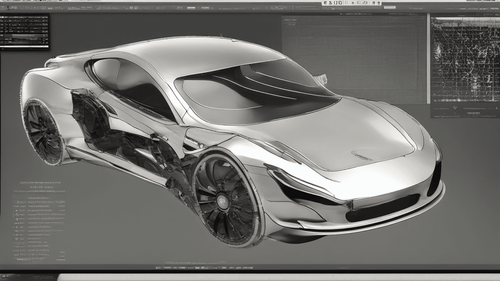
Explore the groundbreaking Tesla radar technology and its applications in modern transportation. Learn how radar systems enhance safety, navigation, and efficiency in vehicles.
Introduction
Tesla, a trailblazer in the automotive industry, has transformed the way we perceive and interact with vehicles. At the heart of its innovation lies the revolutionary Tesla radar technology. This cutting-edge radar system is not just about self-driving cars; it's about redefining transportation safety, navigation, and efficiency. In this comprehensive guide, we delve into the intricate world of Tesla radar technology, exploring its features, applications, benefits, and potential future advancements.
Tesla Radar: A Technological Marvel
The core of Tesla's autonomous driving capabilities resides in its radar technology. This state-of-the-art system employs a combination of radar waves and advanced software algorithms to perceive the vehicle's surroundings with unmatched precision and efficiency.
How Does Tesla Radar Work?
Tesla radar technology operates on the principles of radio wave reflections. Utilizing electromagnetic waves, the radar system emits signals that bounce off obstacles and objects. By measuring the time taken for the waves to return, the system calculates the distance, speed, and relative motion of these objects. This data is then processed and integrated with other sensor inputs to create a comprehensive picture of the vehicle's environment.
Applications of Tesla Radar
Enhanced Collision Avoidance
Tesla's radar technology plays a pivotal role in collision avoidance. By continuously scanning the environment, the radar system can detect potential hazards and obstacles in real time. This data empowers the vehicle's AI to make split-second decisions, activating emergency braking or evasive maneuvers to prevent accidents.
Adaptive Cruise Control
With Tesla's radar-enabled adaptive cruise control, the vehicle can autonomously adjust its speed to maintain a safe following distance from the vehicle ahead. The radar system ensures that the car responds promptly to changes in traffic flow, providing a smoother and safer driving experience.
Autonomous Navigation
Tesla's radar technology is a cornerstone of its ambitious goal to achieve full self-driving capabilities. By processing radar data alongside information from cameras, ultrasonic sensors, and GPS, the AI can navigate complex traffic scenarios, intersections, and even tricky weather conditions.
The Benefits of Tesla Radar
Unparalleled Precision
The accuracy of Tesla radar technology is unmatched, allowing the vehicle to perceive objects and obstacles even in challenging conditions such as low visibility or heavy rain. This level of precision is crucial for maintaining safety and preventing collisions.
Redundancy and Reliability
One of the remarkable aspects of Tesla's approach is redundancy. By integrating radar with other sensor technologies, the vehicle gains multiple layers of data, enhancing the system's reliability. If one sensor encounters difficulties, others can compensate, ensuring the vehicle's continued safe operation.
Constant Evolution
Tesla's radar technology is not stagnant. Through over-the-air updates, the company continually refines and enhances the radar system's performance, ensuring that each vehicle on the road benefits from the latest advancements in technology.
Tesla Radar's Impact on the Future
As Tesla radar technology continues to evolve, its impact on transportation is profound. The advancements made in this field hold the potential to revolutionize how we move from place to place, making travel safer, more efficient, and environmentally friendly.
FAQs
Is Tesla Radar Only for Self-Driving Cars?
No, while Tesla radar technology contributes to self-driving capabilities, its applications extend beyond autonomy. The radar system enhances safety features and driver assistance technologies in all Tesla vehicles.
Can Tesla Radar See Through Obstacles?
Tesla radar technology operates based on reflections, so it cannot see through solid obstacles like walls. However, it excels at detecting objects such as vehicles, pedestrians, and obstacles on the road.
How Does Tesla Ensure Radar Data Privacy?
Tesla prioritizes user privacy and data security. Radar data, along with other vehicle data, is encrypted and anonymized before being used for development and improvement purposes.
What's the Role of Tesla Radar in FSD (Full Self-Driving)?
Tesla's Full Self-Driving (FSD) suite heavily relies on radar data, alongside information from cameras, ultrasonic sensors, and GPS. Radar enhances perception, allowing the vehicle to make informed decisions in complex driving scenarios.
Can Tesla Radar Operate in Extreme Weather Conditions?
Yes, Tesla radar technology is designed to operate effectively in various weather conditions, including rain, fog, and snow. Its ability to penetrate challenging weather is a key factor in maintaining safe and autonomous driving.
Are There Any Limitations to Tesla Radar?
While highly advanced, Tesla radar technology may face challenges in scenarios where objects are not easily distinguishable from the background. Additionally, like any sensor, it may encounter temporary disruptions due to dirt or debris.
Conclusion
In the world of automotive innovation, Tesla radar technology stands as a testament to human ingenuity and progress. By harnessing the power of radar waves and advanced algorithms, Tesla has paved the way for safer, more efficient, and more intelligent transportation. As this technology continues to evolve, it is destined to reshape our understanding of mobility and usher in an era where vehicles are not just machines but intelligent companions on the road. Embracing Tesla radar is not just about embracing innovation; it's about embracing a future where roads are safer, journeys are smoother, and possibilities are limitless.