
Introduction
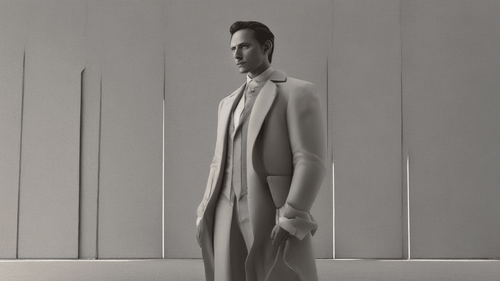
In the realm of inventors and visionaries, few names shine as brightly as Nicholas Tesla. His innovative ideas and groundbreaking inventions have left an indelible mark on the world, shaping the course of modern technology and science. From his early life to his remarkable achievements, this article delves into the life and contributions of Nicholas Tesla, shedding light on the brilliance of a man who dared to dream beyond the ordinary.
Early Life and Background
In the small village of Smiljan, Croatia, Nicholas Tesla was born on July 10, 1856. His early fascination with machinery and science set him on a path of exploration and innovation. Raised in a family of modest means, Tesla's insatiable curiosity drove him to seek knowledge beyond his immediate surroundings. Despite financial challenges, his parents recognized his talents and supported his education, which eventually led him to the prestigious Graz University of Technology in Austria.
Unveiling the Mind of a Genius
An Unconventional Visionary
Tesla's brilliance wasn't confined to conventional norms. His mind operated on a different plane, often envisioning inventions that seemed far-fetched to his contemporaries. His eccentric personality and unyielding determination set him apart as an unconventional visionary.
Harnessing the Power of Alternating Current
At the heart of Tesla's contributions lies the development of alternating current (AC) electrical systems. His rivalry with Thomas Edison and the "Battle of Currents" shaped the future of electricity distribution. Tesla's AC system proved to be more efficient over long distances, a fact that remains pivotal in the way electricity is transmitted worldwide.
The Wardenclyffe Tower: Wireless Transmission of Energy
One of Tesla's most ambitious projects was the Wardenclyffe Tower. With this towering structure, he aimed to achieve wireless transmission of energy, a concept well ahead of its time. Although the project faced financial setbacks and was never fully realized, the underlying idea laid the groundwork for modern wireless communication technologies.
Contributions to Science and Technology
Tesla Coil: Unleashing High Voltage
The Tesla Coil stands as a testament to Tesla's ingenuity. This high-voltage transformer revolutionized radio transmission and played a pivotal role in the development of wireless communication. Its mesmerizing displays of electrical arcs continue to captivate and inspire to this day.
Remote Control and Robotics
Tesla's innovative spirit extended to remote control technology and robotics. His experiments with remote-controlled boats showcased his ability to manipulate devices from a distance, a concept that eventually paved the way for modern remote control systems and even robotic applications.
X-Ray Discoveries
Tesla's relentless curiosity led him to conduct experiments with X-rays, resulting in significant contributions to the field of radiology. While Wilhelm Roentgen is widely credited with the discovery of X-rays, Tesla's explorations refined the technology and its potential applications in medical diagnostics.
Legacy and Impact
The Forgotten Genius
Despite his monumental contributions, Tesla often struggled with financial difficulties and his ideas were overshadowed by more commercially successful endeavors. His passion for science and innovation sometimes took precedence over practicality, leading to his legacy being underappreciated during his lifetime.
Revival of Tesla's Legacy
In recent years, there has been a resurgence of interest in Tesla's work and ideas. Visionaries, scientists, and engineers continue to draw inspiration from his innovative concepts, pushing the boundaries of technology and exploring new frontiers that align with Tesla's pioneering spirit.
FAQs
Who Was Nicholas Tesla?
Nicholas Tesla was a visionary inventor and scientist known for his groundbreaking contributions to the fields of electricity, magnetism, and technology. His innovations laid the foundation for modern electrical systems and wireless communication.
What Were Tesla's Major Inventions?
Tesla's major inventions include the alternating current (AC) electrical system, the Tesla Coil, and his pioneering work on wireless transmission of energy. He also made significant contributions to X-ray technology and remote control systems.
How Did Tesla's Inventions Impact Society?
Tesla's inventions revolutionized the way electricity is distributed and used, paving the way for modern power systems. His work on wireless communication and remote control technology laid the groundwork for advancements in telecommunications and robotics.
Why Is Tesla's Legacy Important Today?
Tesla's legacy is important because it showcases the power of innovation and the impact of unconventional thinking. His ideas continue to inspire scientists, engineers, and inventors to explore new possibilities and push the boundaries of technology.
What Challenges Did Tesla Face During His Career?
Tesla faced financial challenges throughout his career, often struggling to secure funding for his ambitious projects. His eccentric personality and unorthodox ideas sometimes made it difficult for him to gain widespread support and recognition.
How Did Tesla's Rivalry with Edison Shape Technological Development?
Tesla's rivalry with Thomas Edison, known as the "Battle of Currents," had a profound impact on the development of electrical systems. Edison championed direct current (DC), while Tesla advocated for alternating current (AC), which ultimately became the standard for long-distance power transmission.
Conclusion
In the annals of history, few names shine as brightly as Nicholas Tesla. A man of unbounded imagination and relentless curiosity, his contributions to science and technology continue to shape the modern world. From the triumphs of alternating current to the grandeur of his visionary projects, Tesla's legacy remains an enduring testament to the power of human ingenuity. As we move forward into an era of unprecedented technological advancement, it is worth remembering the brilliance of a man who dared to dream beyond the confines of the ordinary and reshaped the course of innovation.