
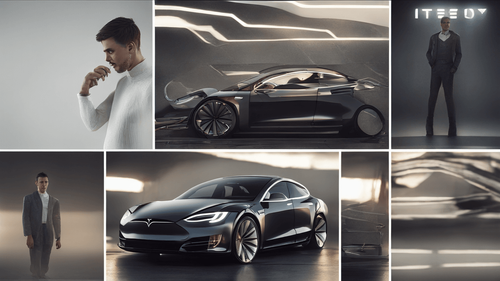
In a world characterized by rapid technological advancements, Tesla, the renowned electric vehicle manufacturer, has taken the lead in revolutionizing transportation with its pursuit of autonomy. The concept of autonomy Tesla refers to the company's ambitious goal of creating fully self-driving vehicles that can navigate without human intervention. In this comprehensive article, we delve deep into the journey of autonomy Tesla, covering its technology, progress, challenges, and the potential impact on the automotive industry and society at large.
Autonomy Tesla: The Foundation and Progress
Tesla's Autopilot technology serves as the foundation for its autonomy journey. Combining advanced sensors, cameras, radar, and powerful onboard computers, Autopilot enables Tesla vehicles to execute certain tasks autonomously, such as adaptive cruise control, lane-keeping, and automated lane changes. This technology lays the groundwork for full self-driving capabilities.
Going beyond Autopilot, Tesla introduced the Full Self-Driving (FSD) package, which promises a future where vehicles can navigate complex environments without human input. FSD leverages neural networks and deep learning to interpret surroundings, recognize objects, and make real-time driving decisions. This package represents a significant step towards the realization of autonomy Tesla.
The Technology Behind Autonomy Tesla
At the heart of Tesla's autonomy technology are neural networks, which mimic the human brain's ability to process information. These networks analyze massive amounts of data from sensors to interpret and respond to dynamic driving situations. By continuously learning and adapting, neural networks enhance the vehicle's decision-making capabilities, making autonomous driving safer and more reliable.
Unlike many other autonomous vehicle projects that rely heavily on LiDAR (Light Detection and Ranging) technology, Tesla has opted for a camera-centric approach. While LiDAR provides precise depth perception, Tesla's cameras gather rich visual data and, combined with neural networks, enable the vehicles to "see" and interpret their environment effectively. This decision has sparked debates within the industry about the viability of LiDAR-free autonomy.
Tesla's Hardware 4.0, an advanced onboard computer, forms the brain of autonomous vehicles. With enhanced processing power and efficient neural network inference capabilities, Hardware 4.0 empowers Tesla cars to handle complex driving scenarios, from navigating city streets to highway merging and parking.
Challenges on the Road to Autonomy Tesla
While Tesla's technology is advancing rapidly, regulatory approvals for fully autonomous vehicles remain a challenge. Governments and transportation agencies must adapt regulations to accommodate self-driving cars. Striking a balance between innovation and safety is crucial as autonomy Tesla pushes the boundaries of traditional driving norms.
Safety is paramount in the development of autonomy Tesla. Tesla vehicles equipped with autonomous capabilities undergo rigorous testing to ensure their reliability and responsiveness in various scenarios. The industry closely monitors safety incidents to address potential concerns and enhance the technology's robustness.
The Potential Impact of Autonomy Tesla
Autonomy Tesla has the potential to significantly reduce traffic accidents caused by human error. With the ability to process information faster and react instantaneously, self-driving vehicles can anticipate and avoid collisions. Moreover, autonomous cars can communicate with each other, optimizing traffic flow and minimizing congestion.
As autonomy Tesla becomes a reality, urban landscapes may undergo transformation. With fewer parking spaces needed, cities can allocate land for other purposes, such as green spaces or public amenities. Additionally, self-driving cars could make commuting more efficient and comfortable, providing occupants with productive or leisure time during their journeys.
The automotive industry isn't the only one poised for transformation by autonomy Tesla. Ride-sharing services, delivery companies, and logistics sectors could experience significant shifts as autonomous vehicles disrupt traditional business models. The rise of autonomy might lead to job creation in areas like AI development, data analysis, and vehicle maintenance.
FAQs: Addressing Common Queries
Autonomy Tesla relies on a combination of sensors, cameras, neural networks, and onboard computers. These components work in tandem to analyze the vehicle's surroundings, interpret road conditions, and make real-time driving decisions without human intervention.
As of now, autonomy Tesla is not fully autonomous in all scenarios. While Tesla's vehicles have advanced driver-assistance features through the Autopilot and FSD packages, they still require driver supervision and intervention in certain situations.
Tesla's approach to autonomy differs in its reliance on cameras and neural networks, while some competitors heavily use LiDAR for depth perception. Tesla's vision-based approach aims to replicate human visual perception, allowing vehicles to navigate using a camera-centric perspective.
Yes, legal and regulatory barriers remain for autonomy Tesla. Many regions lack clear guidelines for fully self-driving cars. Automakers, including Tesla, must collaborate with governments to establish frameworks that ensure safety and compliance as self-driving vehicles become more prevalent.
Tesla's neural networks are trained on vast amounts of data from various driving scenarios, including complex urban environments. This training enables autonomy Tesla to recognize and respond to intricate urban situations, such as navigating through dense traffic, identifying pedestrians, and interpreting traffic signals.
Tesla implements multiple safety measures for autonomy, including redundant sensors, fail-safe mechanisms, and constant software updates. These measures are designed to enhance the system's reliability, minimize risks, and ensure passenger safety.
Conclusion
In the pursuit of autonomy Tesla, the electric vehicle giant has embarked on a remarkable journey that challenges conventional notions of transportation. With groundbreaking technology, unwavering determination, and a vision for a safer, more efficient future, Tesla is pushing the boundaries of what's possible on the road. As the automotive industry transforms and society adapts to the rise of self-driving cars, autonomy Tesla remains at the forefront of innovation, promising a revolution that will shape the way we experience mobility for generations to come.