
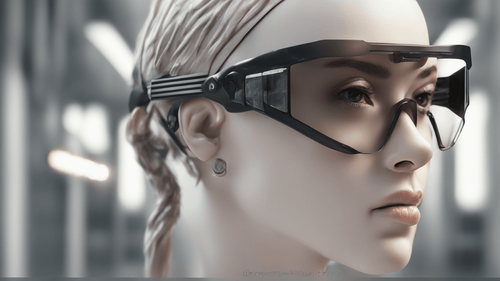
Unveiling the Future of Visual Experience
Introduction
In a world where technology is continuously evolving, augmented reality glasses have emerged as a groundbreaking innovation that blends the physical and digital realms seamlessly. These futuristic eyewear devices are reshaping the way we perceive and interact with the world around us. Augmented reality glasses, often abbreviated as AR glasses, are wearable devices equipped with advanced technologies that superimpose computer-generated images, data, and information onto the user's real-world view. In this comprehensive guide, we delve into the intriguing world of augmented reality glasses, exploring their features, applications, benefits, and the transformative impact they have across industries.
Augmented Reality Glasses: Unveiling the Reality Within
Augmented reality glasses, commonly referred to as AR glasses, are wearable devices that combine cutting-edge technologies to enhance a user's perception of reality. These glasses enable users to experience an augmented version of their surroundings by overlaying digital information onto the real-world environment. Unlike virtual reality (VR), which immerses users in entirely simulated environments, AR glasses enhance the existing environment with computer-generated elements, creating a unique blend of the physical and digital worlds.
Key Features of Augmented Reality Glasses
AR glasses boast an array of features that contribute to their immersive and interactive experience:
-
Optical Display: AR glasses employ high-resolution optical displays to seamlessly integrate digital content into the user's field of vision.
-
Sensors and Cameras: Equipped with sensors and cameras, AR glasses gather real-time data about the user's environment and movements to provide accurate AR overlays.
-
Gesture and Voice Recognition: Intuitive gesture and voice recognition technologies allow users to interact with digital elements using natural movements and commands.
-
Connectivity: Augmented reality glasses are often connected to smartphones or other devices to access the internet, applications, and cloud-based content.
-
Lightweight and Ergonomic Design: Manufacturers prioritize comfort, ensuring that AR glasses are lightweight and ergonomically designed for extended wear.
Applications Across Diverse Industries
The applications of augmented reality glasses span numerous sectors, revolutionizing the way we work, learn, entertain, and interact. From healthcare to education, entertainment to manufacturing, AR glasses are transforming industries in unprecedented ways.
Healthcare: Redefining Medical Practices
AR glasses have found a significant foothold in healthcare, offering surgeons real-time visual guidance during complex procedures. Through AR overlays, doctors can access patient information, visualize vital signs, and even project medical images directly onto their field of view.
Education: Interactive Learning Journeys
In education, AR glasses are ushering in a new era of interactive learning. Students can explore historical sites virtually, dissect complex 3D models, and participate in immersive educational simulations, enhancing their understanding and retention of information.
Entertainment: A New Dimension of Fun
For the entertainment industry, AR glasses offer a fresh dimension of enjoyment. Gamers can engage in augmented reality gaming experiences that seamlessly merge the virtual and physical worlds, creating captivating gameplay scenarios.
Manufacturing and Design: Streamlining Processes
AR glasses are streamlining manufacturing and design processes. Engineers and designers can visualize prototypes in a real environment, make real-time adjustments, and collaborate seamlessly with colleagues across the globe.
Retail and Commerce: Transforming Shopping Experiences
Retail is undergoing a transformation with AR glasses. Shoppers can virtually try on clothing and accessories, visualize furniture in their homes before purchasing, and receive personalized shopping recommendations based on their preferences.
The Advantages of Augmented Reality Glasses
Augmented reality glasses offer a multitude of benefits that extend beyond entertainment and convenience. These advantages are driving the adoption of AR glasses across various sectors.
Enhanced Visualization and Comprehension
AR glasses empower users with a deeper understanding of their surroundings by overlaying relevant information. From architectural annotations to historical context, these visual cues enhance comprehension and engagement.
Improved Efficiency and Productivity
In industrial settings, AR glasses boost efficiency by providing real-time instructions and data. Technicians can receive step-by-step guidance while keeping their hands free, leading to streamlined workflows and reduced errors.
Enhanced Training and Skill Development
AR glasses are revolutionizing training programs. Whether it's medical procedures or complex machinery operations, trainees can benefit from immersive, hands-on learning experiences that accelerate skill development.
Real-Time Data Visualization
Businesses are leveraging AR glasses for real-time data visualization. From analyzing live performance metrics to monitoring supply chain logistics, AR glasses provide actionable insights at a glance.
Remote Collaboration and Communication
Collaboration knows no geographical boundaries with AR glasses. Remote teams can share visual information, offer guidance, and collaborate on projects as if they were in the same room.
FAQs
Are AR glasses compatible with prescription lenses? Absolutely. Many AR glasses manufacturers offer options for prescription lenses, ensuring that users with visual impairments can also experience the benefits of augmented reality.
Can I connect AR glasses to my smartphone? Yes, most AR glasses are designed to connect seamlessly with smartphones. This connectivity enables access to a wide range of applications, content, and internet services.
Do AR glasses have privacy features? Privacy is a priority. AR glasses often come equipped with features like camera shutters and data encryption to protect users' personal information and ensure a secure experience.
Are AR glasses suitable for children? While AR glasses offer exciting possibilities, manufacturers often recommend a minimum age for usage due to concerns about prolonged screen time and potential impact on developing eyesight.
How do AR glasses track my movements? AR glasses employ a combination of sensors, cameras, and motion tracking technologies to monitor your movements and adjust the AR overlays accordingly.
Can I develop my applications for AR glasses? Yes, many AR glasses offer development kits and platforms that allow developers to create customized applications and experiences tailored to the glasses' capabilities.
Conclusion
In the rapidly evolving landscape of technology, augmented reality glasses stand out as a revolutionary leap that merges the digital and physical worlds. With their immersive capabilities, practical applications, and transformative impact on various industries, AR glasses are reshaping how we perceive and interact with reality. As these innovative devices continue to evolve, we can anticipate even more exciting possibilities on the horizon. So, whether it's enhancing medical procedures, transforming education, or revolutionizing retail experiences, augmented reality glasses are undeniably shaping the future of human interaction with technology.
Discover a new way of seeing and experiencing the world through the lens of augmented reality glasses. Embrace the fusion of reality and innovation, and unlock a future where the possibilities are limitless.