
Introduction
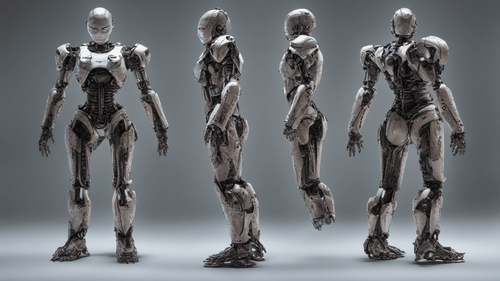
In a world rapidly evolving with technology, one term stands out with its promise of a future that was once confined to the realm of science fiction – AI robots. These advanced creations have moved beyond mere automation, integrating sophisticated artificial intelligence to perform tasks that mimic human cognition. This article delves deep into the realm of AI robots, exploring their evolution, applications, benefits, and potential challenges.
The Rise of AI Robots
The journey of AI robots dates back to the early 20th century when the concept of automata captivated the imagination of inventors and thinkers. From the first programmable humanoid robot "Electro" in the 1930s to the modern humanoid AI robots like "Sophia," the evolution of AI robots has been awe-inspiring.
The Fusion of Automation and AI
AI robots represent the convergence of two pivotal technologies – automation and artificial intelligence. While automation streamlines repetitive tasks, artificial intelligence enables these robots to learn, adapt, and make decisions. This combination has paved the way for AI robots to handle complex processes with remarkable precision.
AI Robot Applications Across Industries
The impact of AI robots is felt across a spectrum of industries, revolutionizing the way tasks are executed. From manufacturing and healthcare to finance and entertainment, AI robots are leaving an indelible mark.
Automating Manufacturing Processes
Robots equipped with AI have revolutionized manufacturing, enhancing efficiency and quality control.
Enhancing Healthcare Delivery
AI robots are playing a pivotal role in healthcare, from performing surgeries with precision to providing companionship for the elderly.
Enriching Customer Service
Customer service has been redefined by AI robots, offering quick and personalized solutions round the clock.
Revolutionizing Transportation
Self-driving cars and delivery drones are clear examples of how AI robots are reshaping the transportation landscape.
The Benefits of AI Robots
The integration of AI in robots brings forth an array of benefits that impact industries, businesses, and individuals alike.
Unwavering Precision and Consistency
AI robots perform tasks with unparalleled precision, reducing errors and enhancing the quality of outcomes.
Increased Efficiency and Productivity
By automating tasks, AI robots free up human resources to focus on creative and strategic endeavors.
Empowering Decision-Making
AI robots analyze vast datasets and provide actionable insights, aiding in informed decision-making.
Enhanced Safety and Risk Mitigation
In hazardous environments, AI robots step in to ensure the safety of human workers, minimizing risks.
Real-Time Monitoring and Analysis
AI robots equipped with sensors monitor environments and gather real-time data for analysis and response.
Navigating Ethical and Societal Concerns
As AI robots become more advanced, ethical and societal concerns have arisen, prompting discussions on their regulation and impact.
Ethical Dilemmas in AI Decision-Making
The ability of AI robots to make autonomous decisions raises questions about accountability and ethical guidelines.
Societal Impact on Employment
The widespread adoption of AI robots has sparked debates about the displacement of human workers and job redefinition.
FAQs About AI Robots
How Does AI Enhance Robot Functionality?
AI enables robots to process data, learn from it, and make intelligent decisions based on patterns and algorithms.
Can AI Robots Develop Emotions?
While AI robots can simulate emotions, true emotional understanding remains a challenge due to the lack of genuine consciousness.
What Are the Potential Risks of AI Robots?
Risks include data breaches, job displacement, and the potential for AI robots to be used maliciously.
Are AI Robots a Threat to Humanity?
AI robots are tools created by humans and can only operate within the limits set by their programming.
How Are AI Robots Trained?
AI robots are trained using machine learning algorithms, fed with large datasets to learn and improve over time.
What Does the Future Hold for AI Robots?
The future promises even more advanced AI robots capable of complex decision-making and interactions.
Conclusion
In the ever-evolving landscape of technology, AI robots stand as a testament to human ingenuity. From automating mundane tasks to simulating intelligent decision-making, these creations have the potential to reshape industries and society at large. As we delve deeper into the possibilities of AI robots, it is imperative to approach their development and deployment with ethical considerations and a commitment to harness their power for the betterment of humanity. The world of AI robots is not just a vision of the future; it's a reality that continues to unfold before our eyes.